A Surgical Robot Delivered by Drone
- Aug 2
- 2 min read

The biggest problem in battlefield trauma is often not the injury itself. It is the time between injury and surgery.
SS Innovations is developing a system designed for that gap: a surgical robot delivered directly to the trauma zone.
How Vimana Aero works
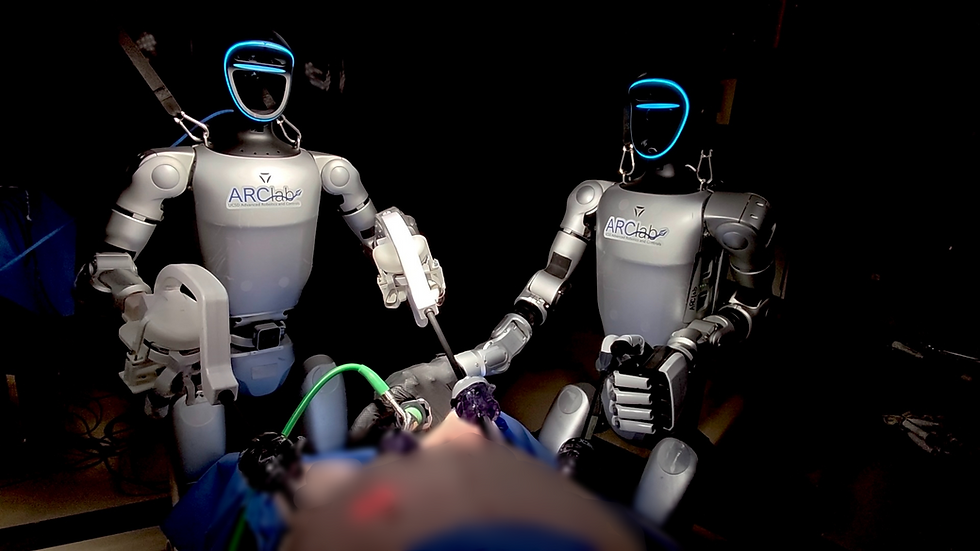
The SSi Vimana Aero is a heavy-lift drone carrying two robotic arms. After landing near a casualty, it connects the system to a trauma surgeon remotely operating through the SSi Mantra command center.
The robotic arms have seven degrees of freedom, allowing movements close to a human arm. They use 5mm laparoscopic instruments and are designed for procedures such as hemorrhage control, wound repair, chest decompression, and field suturing.
The goal is not to replace a trauma team. It is to provide critical surgical capability before evacuation.
Built on existing technology
Vimana Aero is not a standalone experiment.
SS Innovations already develops the SSi Mantra robotic platform for hospital surgery. The drone system extends the same approach into environments where surgeons cannot physically reach.
The robotic arms, instruments, and remote interface are based on technologies already used in clinical settings.
From concept to field use
The system remains under development. SS Innovations has not announced clinical testing timelines or regulatory clearance.
But the concept addresses a long-standing problem in military and disaster medicine: bringing surgical expertise closer to the patient.
The same architecture could eventually apply beyond the battlefield, including remote areas and disaster zones where access to emergency surgery is limited.
Why It Matters
Autonomous and remote surgery began with a simple question: how can surgeons operate when they cannot be there? Vimana Aero revisits that question with modern robotics, connectivity, and mobility.
Source: SS Innovations International