Cedars-Sinai Opens a Center to Build Autonomous Surgical Robots
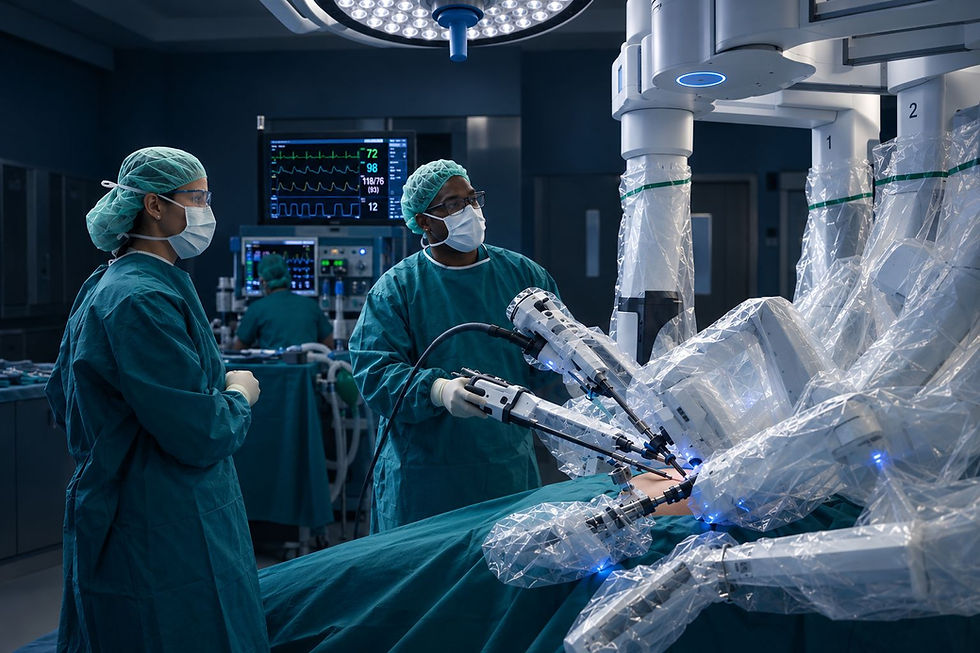
Surgical robots have traditionally acted as instruments that a surgeon controls directly.
On October 12, 2026, Cedars-Sinai announced a center built to change that for specific tasks.
The Center for Autonomous Robotic Surgery is designed to put surgeons and engineers in the same development process from the start.
Who is running it
Andrew J. Hung, MD, a urologist who specializes in minimally invasive robotic surgery, is co-director.
Michael C. Yip, PhD, joins from the University of California San Diego as the other co-director.
Yip previously directed the Advanced Robotics and Controls Laboratory there, with expertise in surgical robotics, machine learning and autonomous systems.
Hung’s research into AI-driven surgical performance metrics will help guide how the autonomous systems behave in the operating room.
Cedars-Sinai describes the pairing as a surgeon-scientist partnership meant to bridge the operating room and the engineering lab.
What the center says it will build
The stated goal is surgical robots that perform certain tasks autonomously while working alongside surgeons.
The systems are described as surgeon-driven, designed to support clinical judgment instead of replacing it.
Cedars-Sinai says the aim is to treat more complex diseases and reach more patients.
Hung argues that robot development has happened too far from the operating room, and that embedding clinical expertise in the engineering process will produce systems surgeons can trust.
What the announcement does not say
The release names no robot, no procedure, and no specific task.
It gives no timeline, no funding figure, and no description of a first clinical study.
It also does not state which level of autonomy the center is targeting.
The language about certain tasks and about supporting judgment is consistent with task-level or supervised autonomy, but that is a reading of the wording and not a claim from the center.
The center is still recruiting clinicians, engineers, and data scientists, which places it at the earliest stage of development.
Why it matters
A dedicated autonomy program inside a major academic medical center places engineering work next to active clinical practice.
That arrangement shortens the path from a lab prototype to clinical testing, which is the stated purpose of the center.
The autonomy ladder explainer shows where announcements like this one will eventually need to be placed.
The first systems, tasks, and results the center publishes will show which level it is actually pursuing.


