A Claude Agent Chose a Gene Therapy, Then Injected It Into a Mouse Brain

Autonomous surgical systems have so far carried out plans that a human wrote.
Choosing the treatment, the target, and the coordinates has stayed a human job.
On October 28, 2026, Exin Therapeutics reported a case in which an AI agent took over those choices for a living animal.
The Agent Made the Medical Decisions
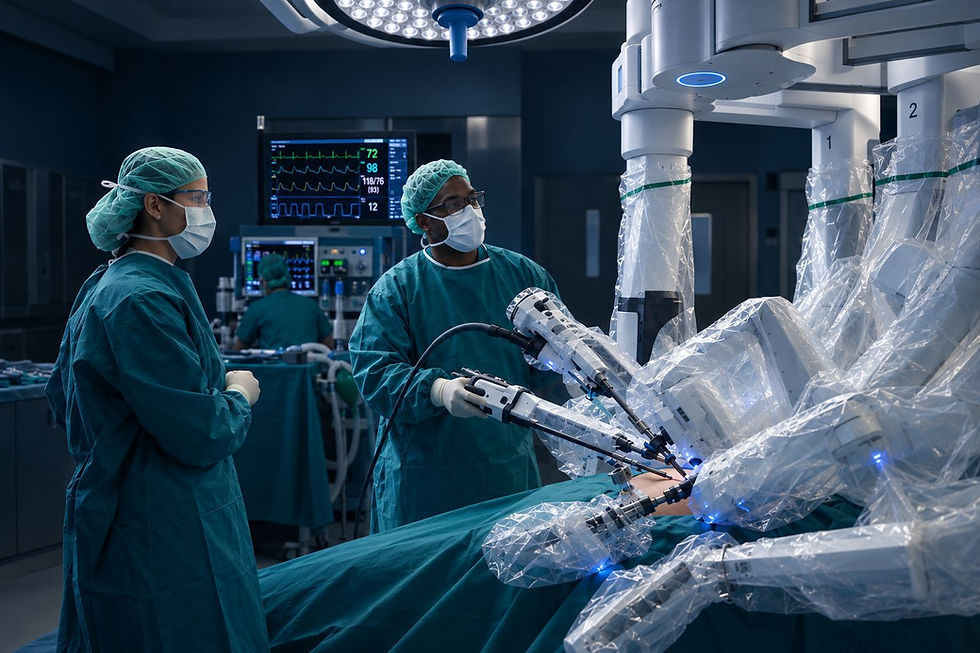
Exin Therapeutics CEO Gabriel Ocana-Santero gave a Claude Sonnet 5 agent a spreadsheet of 19 gene therapy vectors, a mouse model of tonic-clonic seizures, and a motorized surgery rig with cameras.
The only goal was to reduce seizures.
The agent proposed a therapy that increases GABA signaling, the brain’s main inhibitory neurotransmitter, in the neurons that release it.
It chose the lateral entorhinal cortex, which is reported to be where this kind of seizure begins before it spreads.
It also weighed the substantia nigra and set it aside, because the effect depends on which sub-part is hit and the approach failed to stop tonic-clonic seizures in one study.
It took its injection coordinates from three papers, confirmed that each measured depth from the same reference, and averaged them to 3.90 mm behind bregma, 4.00 mm right, and 4.30 mm down.
It then injected 250 nanoliters over five minutes and set the motor speed and wait times itself.
Humans Held the Irreversible Steps
A licensed veterinarian gated every irreversible step and held a physical emergency stop that cut power to every motor.
A human surgeon performed the craniotomy, which the agent is not yet allowed to do for safety reasons.
Fixed validators, such as a limit on injected volume, capped what the agent could do, and the agent was banned from overriding them.
The agent watched the surgical field through the rig camera and logged 32 observations, including injection progress and the absence of bleeding or backflow.
The Agent Said No
After a disconnect, the agent tried to move, and the rig refused because the Y axis had computed a target of 34 mm on a rig with 30 mm of range.
The agent reported that nothing had moved, that the needle was still at bregma zero, and that it would not retry.
The team re-zeroed bregma and got the identical number, and the agent declined again.
The agent was right, because manual moves during an earlier hold had desynchronized the controller from its reference.
Ocana-Santero could not talk it into trying anyway, so he fixed the code by hand while the animal remained under surgery.
What the Result Shows
Ocana-Santero wrote that in every earlier autonomous surgical robot, a human decided what operation to perform and the robot executed it.
He said nobody told this agent what to give or where to put it, and he knows of no earlier agent that chose a treatment and a brain target and then delivered it into a living mammal.
Model choice mattered too, because Opus 5.5 refused as soon as it detected biology, and Opus 5 completed a dry run on water and graph paper before stopping at the start of the live surgery.
Opus 5 reasoned that starting a procedure it might not finish on an anesthetized animal was worse than not starting, so Sonnet 5 ran the live surgery from start to finish.
The mouse recovered well, but the thread does not say whether the therapy reduced seizures.
The account comes from the team that ran the experiment, and the team has said a technical report will follow.
The refusal may prove the more important lesson, because hard limits and an agent that respects them caught a fault that a system built only to obey could have pushed into living tissue.
For a map of which surgical technologies have actually reached the operating room, see The 2026 Surgical Technology Intelligence Report.
Related reading
Sources
Gabriel Ocana-Santero, thread on X, October 28, 2026: https://x.com/OcanaSantero/status/2115442964574908902